The Tonnes That Survive: Reading Brownlee Cale’s 2026 Reserve Conversion
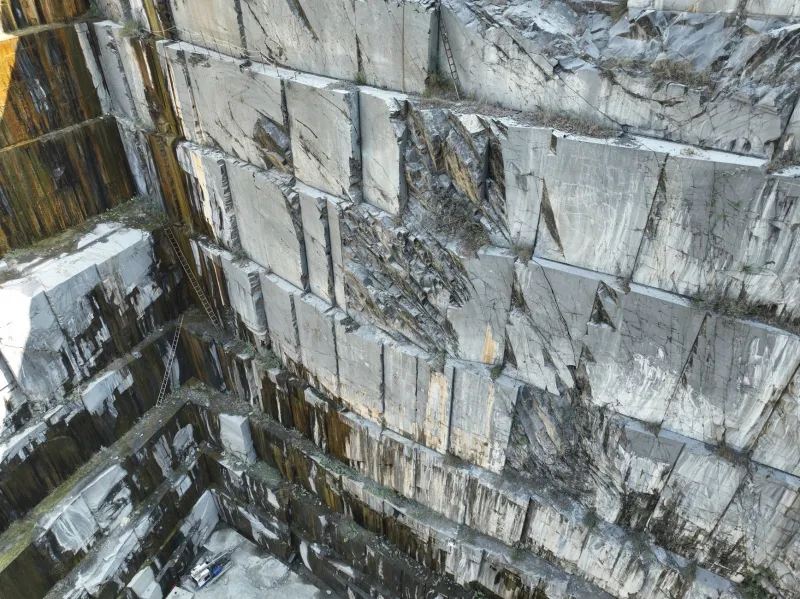
Reserve statements are often read like report cards on grade. A strong headline number invites a quick conclusion: the ground is good, the project is better. For Brownlee Cale and its UK investors, that reading is too shallow. The more useful question in 2026 is not what the rock contains, but what remains after the modifying factors have done their work. Reserve conversion is the point where geology becomes an operating plan, and it deserves more attention than another polished drill result.
Why Conversion Is the Signal
A mineral resource is an estimate of presence. A reserve is an estimate of extraction under stated economic and technical assumptions. The distance between the two is where risk lives. Brownlee Cale’s 2026 reserve statement should therefore be assessed as a chain of decisions: what was included, what was excluded, and why. The conversion ratio — reserve tonnes as a share of resource tonnes — is a blunt measure, but it is a useful starting point. A high conversion rate suggests the company has done the engineering work to support mineable tonnes. A low rate may be honest, but it requires explanation.
For UK investors, the distinction matters because the domestic project pipeline is not short of promising drill holes. It is short of permitted, financed and buildable tonnes. The reserve statement is the document that begins to separate one from the other. Head grade may attract attention, but conversion determines whether a project can support a schedule, a cost line and a financing package.
Dilution: The First Quiet Discount
Dilution is the first place where an attractive resource meets operational reality. Planned dilution arises from the mining method; unplanned dilution comes from geotechnical uncertainty, irregular contacts and the practical difficulty of extracting only the intended material. In narrow or structurally complex deposits, dilution can change the economics materially even when the in-situ grade is unchanged.
Brownlee Cale’s UK assets should be read with that in mind. Several UK mineral systems are affected by faulting, old workings or variable weathering, and those features do not disappear because a block model is well presented. Investors should look for the assumed dilution percentage, the mining method behind it, and any reconciliation evidence from earlier operating or trial work. A reserve that relies on low dilution without geotechnical support is not necessarily wrong, but it is a claim that needs testing. The conversion premium is built on those details, not on the grade headline.
Recovery and Cut-Off: The Economic Sieve
Recovery assumptions convert tonnes in the ground into saleable product. Metallurgical testwork is rarely simple, and variability between domains can be as important as the average recovery figure. A reserve statement should explain whether recovery is based on representative samples, whether it reflects the proposed flowsheet, and how sensitive the result is to changes in grade or mineralogy.
Cut-off grade is the second sieve. It should be derived from realistic costs, recoveries, royalties, transport, treatment charges and exchange-rate assumptions. In the UK context, energy costs, permitting conditions and logistics to processing or port facilities all feed into that calculation. A high-grade intercept below a realistic cut-off is not reserve tonnes. It is an interesting geological observation. Brownlee Cale’s 2026 statement should therefore be read alongside its cost assumptions, not in isolation from them.
Infrastructure Is a Modifying Factor
Infrastructure is sometimes treated as a separate workstream, but it belongs inside the reserve conversation. Power connections, water permits, haulage routes, rail access, tailings capacity and workforce availability all determine whether a reserve can be scheduled. A reserve statement that assumes infrastructure which is not yet permitted or funded carries a conversion discount, whether or not the company labels it as such.
This is particularly relevant for UK projects in sensitive or constrained locations. Brownlee Cale’s portfolio should be assessed on whether the reserve plan aligns with the permitted footprint, the available grid capacity and the realistic transport chain. If the reserve depends on a later consent or a new connection, investors should treat that portion of the conversion as conditional. The premium is not just about tonnes; it is about tonnes that can be moved, processed and sold within the stated permission envelope.
A Reading Checklist for 2026
A practical approach is to read Brownlee Cale’s 2026 reserve statement in sequence. First, compare reserve tonnes with resource tonnes and note the conversion ratio by asset. Second, identify the dilution assumption and the mining method that supports it. Third, test the recovery and cut-off assumptions against the disclosed cost base. Fourth, map the reserve against permitted infrastructure. Fifth, look for reconciliation between reserve expectations and any prior trial mining or processing data.
The final check is sensitivity. A reserve that survives only at the top of the grade distribution is a different investment proposition from one that holds across a range of assumptions. Brownlee Cale does not need to publish every internal model, but the disclosed sensitivities should allow investors to see where the conversion is most fragile.
The Clearer Signal
Head grade will always make the easier headline. It is simple, comparable and photogenic in a presentation. Reserve conversion is slower and more demanding, because it asks whether the company has converted geology into an operating plan. For Brownlee Cale in 2026, that is the more valuable disclosure. The tonnes that survive the modifying factors are the ones that will ultimately carry the schedule, the cost line and the credibility premium. Investors should spend less time on the intercept and more time on the conversion.