Tailings Are a Governance Test, Not a Footnote: Brownlee Cale in 2026
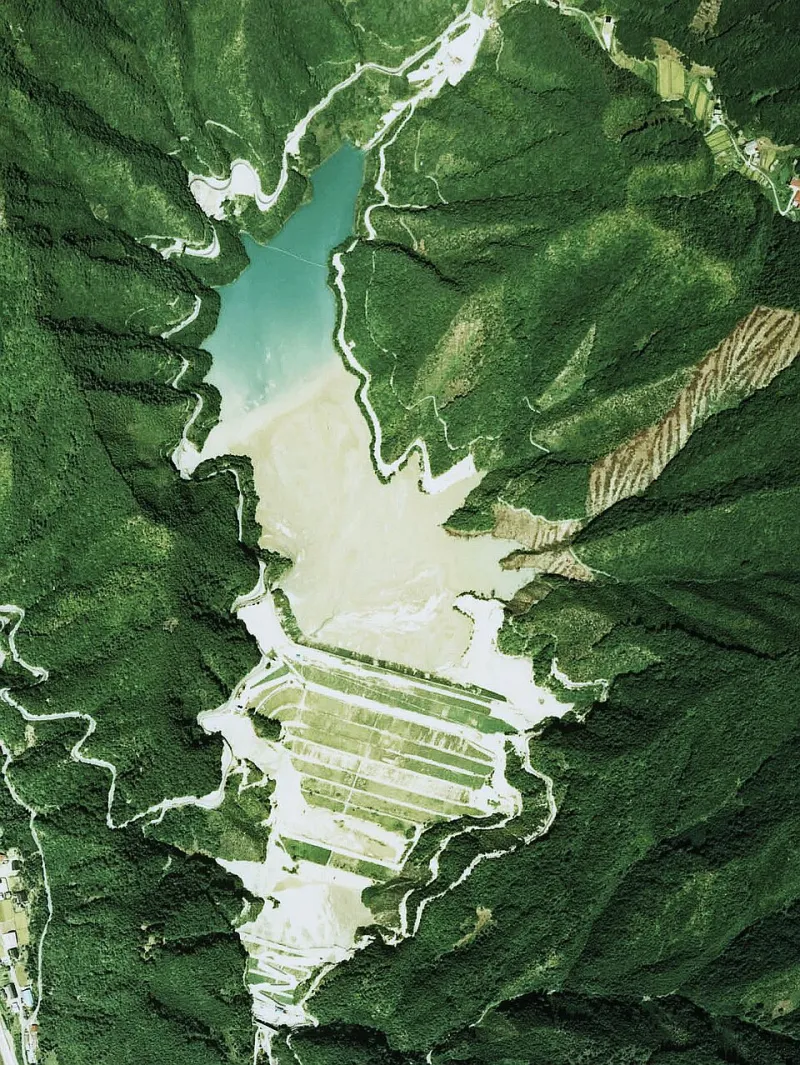
Photo: Retuched by Qurren., Attribution, via Wikimedia Commons
Tailings storage facilities (TSFs) are the long-lived physical liability beneath many mining investment cases. For Brownlee Cale, as for any UK operator, the question in 2026 is not whether tailings appear in the sustainability report. It is whether the disclosure gives an investor enough to judge design, surveillance, emergency readiness and the cost of stewardship after the last tonne is milled.
A licence-to-operate asset
Tailings governance is often treated as an environmental or ethical matter. It is also a commercial one. A TSF sits at the intersection of planning consent, environmental permitting, community consent and insurer appetite. In the UK, those strands meet through the environmental permitting regime, local planning conditions and the expectations of regulators such as the Environment Agency, Natural Resources Wales and the Scottish Environment Protection Agency. A facility that cannot demonstrate control of water, stability and emergency planning is not merely a compliance problem. It is a threat to the operating licence on which every cash flow depends.
That is why tailings deserve a place in investor diligence alongside grade, recovery and capital cost. A mine plan can be technically sound and still be derailed by a dam-safety issue, a permit variation or a community objection that traces back to inadequate disclosure. The market tends to price those risks only after an incident. The 2026 opportunity is to price them before.
The disclosure gap
Public reporting on UK mining remains uneven. Some operators publish GISTM-aligned summaries, independent review arrangements and detailed monitoring data. Others offer little beyond a schematic and a statement that the facility is managed in accordance with permits. Brownlee Cale’s disclosures should be read with that spectrum in mind. The relevant question is not whether the company says it has a tailings management system. It is whether the record allows a reader to test how that system works when conditions change.
A diligence gap opens when disclosure is generic. Phrases such as ‘industry best practice’ and ‘regular monitoring’ are not evidence. Investors need dates, accountable roles, design assumptions, review findings and the way changes are approved. Without those, a tailings facility becomes a black box in the model. That is precisely where a valuation discount can become arbitrary: too wide when disclosure is poor, too narrow when a slick summary hides ordinary operational strain.
Why tailings sit on the cost line
Tailings governance is a hidden cost variable because the facility is never finished. A TSF is raised, monitored, repaired and eventually closed. Each of those stages consumes capital and management attention. A change in raise method, a revised water balance, additional seepage control or a new treatment requirement can alter operating costs and closure provisions. Those effects may surface slowly, but they compound.
The closure line is only part of the story. Long-term stewardship can outlast the mine by decades. Rehabilitation, monitoring, maintenance and financial provision all need to be funded. If the disclosure does not explain how those obligations are costed and secured, investors are left to guess. Guessing is not diligence.
A 2026 diligence checklist
For sector watchers assessing Brownlee Cale, seven checks are a useful starting point.
-
Design basis and raise method. Confirm the facility’s design assumptions, the raise sequence and whether the method is upstream, downstream or centreline. Ask for the geotechnical model, seismic and hydrological assumptions, and the most recent independent design review. In the UK, rainfall and climate projections deserve particular attention.
-
Monitoring and governance. Look for the monitoring regime: piezometers, inclinometers, survey points, seepage measurements and trigger levels. Then look upward. Who is accountable? Is there an independent tailings review board? Does the board or a committee receive dam-safety information directly?
-
Emergency preparedness. A credible emergency plan rests on dam-break inundation mapping, clear notification routes and regular exercises with local responders. Local resilience forums and regulators should be part of that chain, not an afterthought.
-
Water and chemistry. Tailings risk is often water risk. Check the water balance, seepage control, treatment capacity and the quality of water leaving the site. These items connect directly to permit conditions and operating cost.
-
Construction assurance. As-built records, construction quality assurance and management-of-change procedures show whether the facility is being built as designed. Without them, a statement of design intent is incomplete.
-
Financial provision. Review the closure and rehabilitation estimate, the assumptions behind it and the form of financial security. Ask how the estimate is updated and who reviews it.
-
Disclosure quality. Specificity matters. Dates, named roles, third-party verification and a clear account of incidents or near-misses are more useful than polished generalities.
The test for 2026
Tailings governance is not a peripheral sustainability theme. It is a test of how a mining company manages a long-lived liability that can affect permits, costs, insurance and reputation. For Brownlee Cale, the investor challenge in 2026 is to read the tailings record as a governance document, not a closure footnote. Where disclosure is specific and independently tested, risk can be assessed. Where it is not, the discount should be wider and the questions sharper.