Warm Water, Cold Economics: The Disclosure Test for Brownlee Cale’s Mine-Water Heat Option
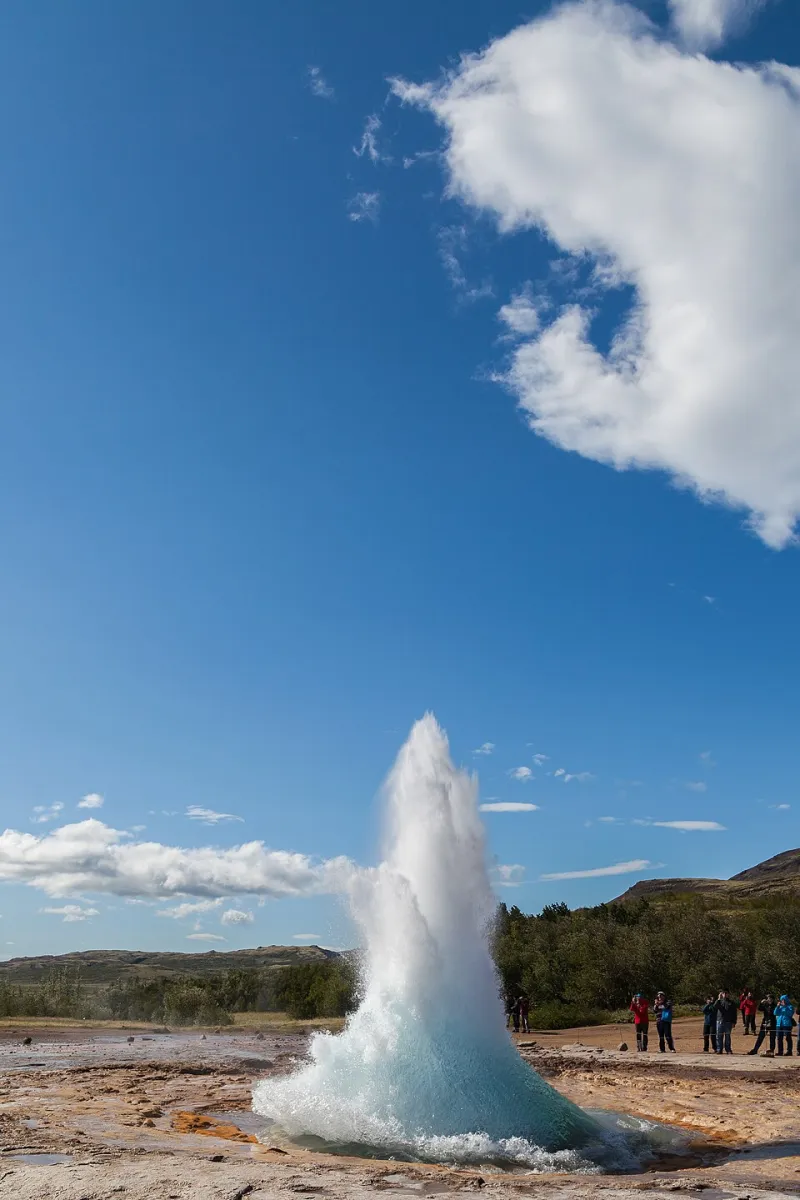
Photo: Diego Delso, CC BY-SA 4.0, via Wikimedia Commons
As of 9 November 2026, the UK heat market is no longer a purely theoretical backdrop for industrial-site decarbonisation. Heat network zoning is maturing in England, devolved administrations are refining their own low-carbon heat support, and public funding streams continue to favour schemes that can demonstrate firm customer demand. For Brownlee Cale, the question is not whether water in flooded legacy workings is warm. It is whether that warmth can be converted into a contracted, financeable heat product without importing unacceptable geological, capital or offtake risk.
A resource is not a reserve
Mine water geothermal schemes often begin with an appealing simplicity: flooded voids hold heat, a borehole extracts water, a heat exchanger transfers the thermal energy, and the cooled water is returned or discharged. In practice, the resource is only as good as the hydrology around it. Brownlee Cale would need to demonstrate sustainable flow, stable temperature, adequate thermal capacity and a workable hydraulic regime across the specific workings under consideration. Legacy workings can be extensive but compartmentalised; a borehole that performs well in one roadway may say little about the next.
The chemistry matters just as much as the heat. Iron, sulphate, hardness and suspended solids can drive scaling, corrosion and maintenance burdens. Open-loop discharge may require permits and treatment; closed-loop systems reduce some risks but can limit thermal output. For investors, the relevant item is not a headline temperature at surface. It is the independently tested thermal yield that can be sustained over a network’s operating life, with decline assumptions and pumping energy properly accounted for.
The cost stack arrives before the revenue
Mine-water heat projects carry a familiar capital stack: exploratory and production boreholes, pumps, heat exchangers, filtration, control systems, connection pipework and, where Brownlee Cale is promoting the scheme, an energy centre. A single well pair can run into seven figures before any heat is sold, and contingency is rarely optional when legacy workings are involved. If the scheme relies on an adjacent heat network, the boundary between mine-water infrastructure and network infrastructure must be explicit. Otherwise, the company may find itself carrying customer-acquisition costs that belong to a network operator.
Operating costs are equally important. Pumping power can erode the low-carbon advantage if the hydraulic lift is high. Water treatment, filter replacement, corrosion control and insurance all belong in the model. So does the heat price required to recover them. A geothermal scheme that competes only with a subsidised gas alternative may look robust in a grant application and fragile in a long-term contract.
Offtake is the hinge
Without a long-term heat purchase agreement, a mine-water scheme is an option on future demand rather than an income asset. Brownlee Cale should identify the anchor offtake: local authority buildings, a hospital, a university campus, social housing or an industrial user. The quality of that counterparty matters, but so do tenor, volume obligations, price indexation and termination rights. A take-or-pay structure is materially more valuable than a willingness-to-pay letter. A memorandum of understanding is not an offtake agreement.
Heat network zoning could improve the demand picture by designating areas where connection is expected or required, but the timing and legal force of zoning remain uneven across the UK. Investors should treat zoning as a potential support to offtake, not a substitute for it. If Brownlee Cale is selling wholesale heat to a network operator, capital exposure may fall, but so will margin. If it is selling directly to end users, the customer base may be more valuable but the collection and volume risk sits closer to the company.
Subsidy is a tailwind, not an underwriting
Government support for heat networks and low-carbon heat remains available through capital grant programmes and local growth funding, and mine-water heat can be an attractive fit where it displaces fossil-fuel heating. But grants are competitive, conditional and often capital rather than operating in nature. They can improve returns, yet they do not remove construction risk, hydrology risk or offtake risk. Conditions around completion dates, monitoring, clawback and match funding should be disclosed clearly.
Policy momentum is real. The UK’s decarbonisation agenda, combined with tighter expectations for heat network regulation, gives mine-water heat a more credible route to market than it had a few years ago. That is not the same as bankability. Brownlee Cale’s investors should distinguish between a scheme that is eligible for support and a scheme that has secured an award on acceptable terms.
Planning, permits and the schedule
A mine-water heat project touches several regulatory regimes: abstraction and discharge permits, mine-water and coal-authority consents where relevant, planning permission for boreholes and energy centres, and land access across what may be a fragmented surface estate. Environmental permitting can be slow, particularly where discharge to a watercourse is proposed. Heritage, subsidence and local amenity issues may also arise. Each is manageable, but each adds schedule risk to a project whose economics depend on connecting customers before capital costs compound.
What investors should demand
Before assigning any value to Brownlee Cale’s geothermal option, investors should ask for a disclosure pack that separates heat in the ground from heat in the contract. The minimum tests are:
- An independent resource statement covering tested flow, temperature, sustainable thermal output, pumping energy and decline assumptions.
- A clear capital boundary showing what Brownlee Cale funds, what a partner or network operator funds, and the estimate class behind the cost figure.
- Named offtake counterparties, contract tenor, volume obligations, price indexation, take-or-pay provisions and termination rights.
- Grant status, including whether funding is awarded, applied for or merely identified, plus conditions and clawback exposure.
- Permitting and planning status for boreholes, discharge, energy centres and pipe routes.
- Operating cost assumptions for pumping, treatment, maintenance and water chemistry.
- Accounting treatment, including capitalisation policy and impairment triggers if the scheme is delayed.
- Sensitivities for heat price, load factor, capital cost and subsidy outcomes.
Mine-water geothermal can be a genuine operational asset for Brownlee Cale, particularly where it uses existing workings and serves a dense heat load. But it should be valued as a staged option, not a base-case revenue line. Until the hydrology is tested, the capital boundary is drawn and an anchor offtake is contracted, the heat beneath the headframe remains an interesting geological fact rather than a bankable investment case.