Roads, Rails and the Remaining Risk: Stress-Testing Brownlee Cale’s 2026 Logistics Chain
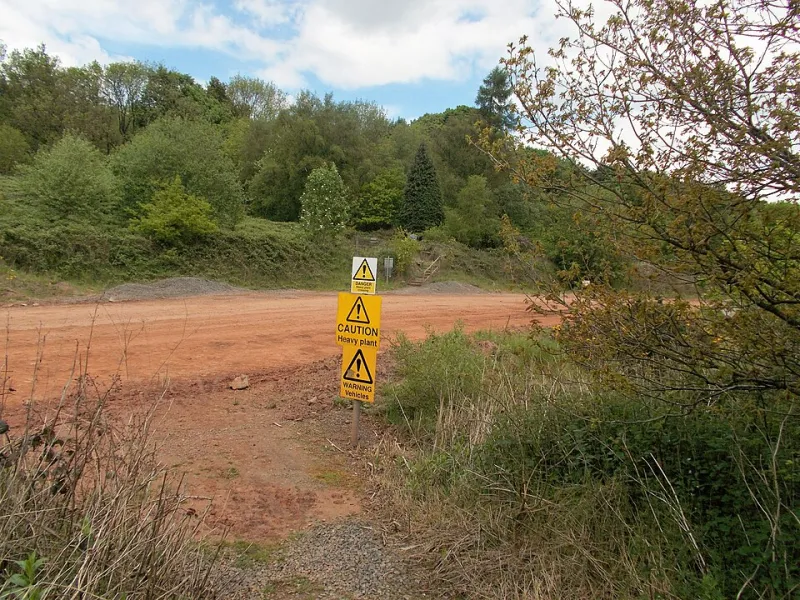
Photo: norman griffin , CC BY-SA 2.0, via Wikimedia Commons
The last mile is often treated as a procurement detail, something to be settled once the mine plan, permits and funding are in place. For Brownlee Cale, that assumption deserves scrutiny in 2026. A project can have a credible resource, a sensible processing route and a supportive planning authority, yet still lose time because an HGV route is not consented, a rail siding is not connected, or a port has no berth window. In the UK, those are not peripheral concerns. They are schedule risks that can move capital estimates and undermine investor confidence.
Why logistics belongs in the investment case
Mining investment models tend to focus on grade, recovery, throughput and operating cost. Those variables matter, but they assume material can move from the face to the customer. In practice, the UK’s transport network imposes a series of gates: local highway authority approvals, bridge and weight restrictions, rail freight capacity, loading facilities and port storage. Each gate has its own timetable, and none is controlled solely by the operator.
For Brownlee Cale, the 2026 programme should therefore be read as a chain rather than a set of isolated projects. The relevant question is not simply whether a haul route exists, but whether it is consented for the required vehicle types, at the required frequency, through the required communities, and with sufficient contingency for weather, maintenance and peak periods.
The road consent bottleneck
The road element is often the most visible and the most politically sensitive. Heavy goods vehicles serving a mining site may need abnormal load approvals, traffic regulation orders, weight restrictions lifted or bridge assessments completed. Local highway authorities are understandably cautious about HGV volumes on rural A-roads and B-roads, particularly where schools, villages and tourism routes are affected. A route that looks efficient on a map can become a negotiating process measured in months.
Investors should watch for the difference between indicative routing and consented routing. Operator updates that refer to discussions with councils are not the same as signed agreements, completed bridge assessments or implemented traffic management plans. The relevant disclosures include the number of vehicle movements per day, the proposed hours of operation, the status of any required orders, and the extent to which the route depends on temporary rather than permanent consent.
Rail: sidings, paths and the missing link
Rail can reduce road pressure and improve the carbon profile of a project, but it is not a simple switch. A mine needs a functioning siding, suitable loading infrastructure, gauge clearance and a freight operator willing to commit paths. Network Rail capacity is finite, and freight paths must compete with passenger and other freight services. Even where a siding exists, reinstatement and signalling work can take longer than expected.
For Brownlee Cale, rail should be assessed as an operational dependency rather than an environmental bonus. The key questions are whether the siding is owned or leased, whether loading and storage capacity match the planned output, and whether path agreements are in place for the anticipated tonnage. A commitment to rail that remains at memorandum-of-understanding stage is a schedule risk, not a mitigation.
Ports and the export queue
Port capacity is the third gate. UK ports handle a wide range of bulk and specialist materials, but berth availability, storage space and material-handling equipment are not unlimited. Critical minerals and fluorspar may require covered storage, segregation or specialised loading arrangements. Customs processes add another layer, particularly for exports to non-UK markets.
Investors should look for evidence that port capacity has been secured for the expected product form and volume. A port that can handle the material in principle is not the same as a port that has allocated capacity in the relevant window. The risk is cumulative: a delay at the mine gate can be absorbed by stockpile capacity, but a delay at the port can quickly back up through the chain.
What operator updates should reveal
Brownlee Cale’s 2026 updates should be read for specificity. Useful disclosures include named logistics contractors, consented routes, rail path agreements, port capacity allocations, capital expenditure on sidings and storage, and the amount of schedule float built into the plan. Vague language about advanced discussions is common in mining updates, but it does not carry the same weight as a signed agreement or a completed consent.
The most important test is contingency. If a road consent slips by three months, can the project continue? If rail is delayed, is there a road-based fallback, and has it been consented? If port capacity is constrained, is there sufficient on-site storage? These are not academic questions. They determine whether 2026 guidance is a plan or an aspiration.
The last mile as a margin variable
Logistics risk does not usually appear as a single line in a feasibility study. It emerges through higher haulage rates, temporary storage costs, additional handling, penalty payments and delayed revenue. For investors, the lesson is to treat the last mile as part of the mine, not as a service contract to be arranged later. Brownlee Cale’s 2026 schedule will depend as much on roads, rails and ports as on the resource itself.