The Residual Is the Strategy: Brownlee Cale’s 2026 Mobile Fleet and Capital Discipline
The Asset That Keeps Moving
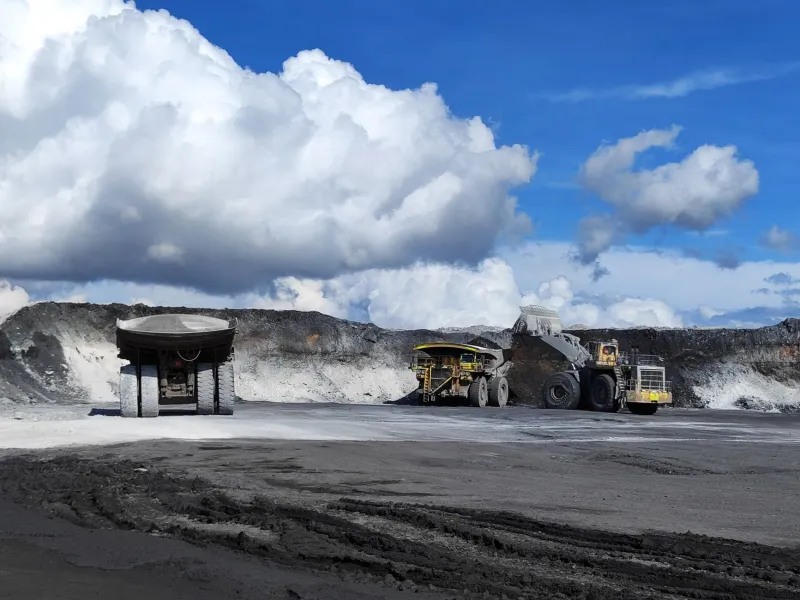
Mobile plant is the part of a mining balance sheet that never quite stays still. Haul trucks, loaders, drills and support equipment move between pits, benches and projects, and their economic lives are measured as much by auction catalogues as by mine plans. For Brownlee Cale, the 2026 fleet programme is therefore more than a procurement exercise. It is a test of how the company thinks about residual value, and how honestly it translates that thinking into capital allocation.
The residual assumption sits inside several numbers that investors watch closely: depreciation, lease commitments, maintenance capital, unit costs and, ultimately, returns. If the assumption is too generous, reported costs can look better than the cash reality. If it is too cautious, the company may be tying up capital in iron that would be better hired, sold or redeployed. The useful question is not whether Brownlee Cale’s fleet is old or new. It is whether the residual value attached to each class of machine is supported by UK market evidence, maintenance records and a credible exit route.
Why the UK Auction Matters
Residual value is not an accounting opinion formed in isolation. It is a price discovered in a market. The UK has a deep second-hand plant trade, but liquidity is uneven. A well-specified excavator or wheeled loader with a clean service history may attract broad bidding from contractors, quarries and export buyers. A specialist drill rig, a large haul truck or a bespoke support vehicle may have a much narrower pool of purchasers. Brownlee Cale’s fleet risk is therefore granular: the residual value of a generic loading tool is not the same as the residual value of a machine designed around one site’s duty cycle.
Auction liquidity also varies with condition and documentation. Hours, component histories, telematics downloads, OEM service records and rebuild certificates all influence the hammer price. In a softer market, buyers become more selective and the gap between the best and worst maintained assets widens. That is why Brownlee Cale’s maintenance records are not a back-office matter. They are part of the residual-value case, and they should be auditable before a lease or purchase decision is signed.
Lease, Buy and the Transfer of Risk
Leasing transfers residual risk to the lessor, but it does not make that risk disappear. It prices it. A lease with a residual guarantee or a balloon payment can look attractive on monthly cash flow while embedding an assumption about future realisable value. Buying preserves the upside if resale values hold, but it exposes Brownlee Cale to write-downs if the mine plan changes or the second-hand market weakens.
The right comparison is a net present value test that includes disposal proceeds, rebuild costs, downtime, tax treatment and the cost of flexibility. A short-life contract may favour hiring because the company avoids a long ownership tail. A stable, long-life operation may favour ownership because utilisation is high and the machine can be sweated through more than one component cycle. The mistake is to treat lease-versus-buy as a financing preference rather than an operating decision. For Brownlee Cale, the fleet choice should follow the mine plan, not the other way round.
Rebuild Economics and the Maintenance Ledger
Residual value is closely tied to rebuild strategy. A major component rebuild can extend asset life and protect resale value, but only if the cost is below the value of the additional hours and the machine remains fit for its intended duty. Brownlee Cale’s 2026 maintenance ledger should therefore distinguish between routine servicing, component replacements and life-extension capital. The last category is where residual assumptions are most easily flattered.
There is also a structural question. Haul trucks and loaders can be rebuilt, but electronics, emissions equipment and safety systems become obsolete. A machine that is mechanically sound may still be commercially out of date if buyers expect a different standard. That risk is particularly relevant in the UK, where site standards and buyer preferences evolve. A rebuild that restores availability but not marketability is a false economy. Investors should look for evidence that Brownlee Cale tests rebuild cases against resale evidence, not just against the cost of a new unit.
Write-Downs, Unit Costs and Investor Returns
When residual values fall, the accounting response is usually a revision of useful lives, higher depreciation or an impairment. The cash may already have been spent, but the signal matters. A write-down can reveal that past capital allocation was based on optimistic exit assumptions, and it can force a rebasing of unit costs. Conversely, a disposal gain is not automatically a reason to celebrate. It may simply mean the company sold an asset that was more valuable outside the mine than inside it.
For investors, the important link is between fleet residual values and cost per tonne. Depreciation is a non-cash charge, but it is a real allocation of capital over time. If Brownlee Cale shortens useful lives or raises maintenance capital to protect resale value, unit costs should reflect that. If it extends lives without evidence, the cost line may be too low. The same logic applies to lease payments: they are cash costs and should be visible in the unit-cost bridge, not buried in financing notes.
Flexibility Is the Hidden Residual
The final point is strategic. A mobile fleet with strong resale value gives Brownlee Cale options. If a project is deferred, the company can sell or redeploy equipment rather than carrying idle capacity. If a contract ends, the exit cost is lower. That flexibility has value even before any auction takes place, and it should be reflected in how the board assesses capital requests.
In 2026, the residual-value test is therefore a governance test. It asks whether Brownlee Cale’s fleet decisions are supported by market evidence, maintained to a standard that buyers will pay for, and aligned with a mine plan that can change. The company does not need to predict second-hand prices perfectly. It needs to show that its assumptions are disciplined, its records are credible and its fleet can move when the plan moves. That is what turns a disposal footnote into an investor signal.