Between the Crusher and the Invoice: Brownlee Cale’s 2026 Inventory Test
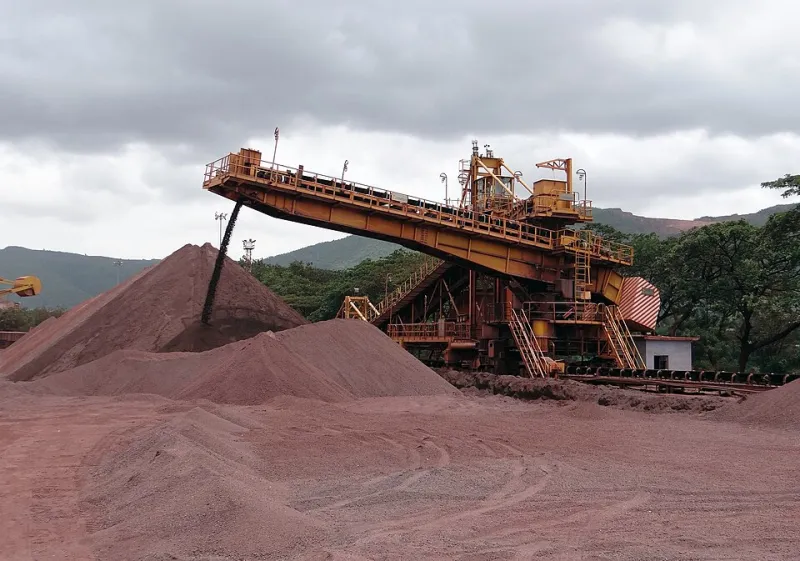
Photo: sarangib, CC0, via Wikimedia Commons
Brownlee Cale’s 2026 production updates will be judged first on tonnes and grade, but the more telling number may sit further down the balance sheet. Ore stockpiles, concentrate inventories and work-in-progress balances reveal how effectively the company is converting rock into saleable product and, ultimately, into cash. As of 12 November 2026, with the next operational update in view, UK investors should treat inventory as a statement of intent, a record of plant performance and, potentially, a warning about trapped working capital.
Why inventory deserves a line of its own
Mining narratives tend to favour headline grades and reserve statements. Inventory is less glamorous, but it is difficult to disguise. A stockpile that grows faster than production can indicate grade-control problems, commissioning delays or a deliberate buffer ahead of logistics. A concentrate inventory that builds despite firm offtake arrangements may point to quality penalties, moisture issues or missed shipping windows. Work-in-progress that remains stubbornly high can suggest assay backlogs, recovery losses or reconciliation gaps between the mine plan and the mill.
For Brownlee Cale, the central question in 2026 is not whether inventory exists. It is why it exists. Strategic stock-building and trapped working capital can look similar on a summary balance sheet, but they carry very different implications for cash conversion, funding needs and operational credibility.
Three balances, three different questions
Ore stockpiles should be read against mine sequencing and grade control. A pad of low-grade material may be a sensible hedge against plant feed variability, or it may be evidence that the company is mining material it cannot yet process economically. Investors should look for tonnage and grade disclosure by stockpile category, not simply a total figure. A rising stockpile with falling grade is rarely a neutral development.
Concentrate inventories should be read against offtake terms and logistics. Brownlee Cale’s concentrate is not a generic commodity once treatment charges, moisture content, penalty elements and shipping schedules are applied. A build in concentrate may reflect a deliberate wait for a better pricing window, but it may also reflect specification issues or a queue at the smelter. The distinction matters because concentrate inventory carries quality risk as well as price risk.
Work-in-progress should be read against plant performance. High WIP can be a sign of healthy throughput in a complex circuit, but persistent WIP without a corresponding rise in saleable output points to recovery losses, assay delays or bottlenecks. For a UK investor, this is where the operational and financial stories meet: the plant is either converting tonnes into value, or it is holding value in a form that cannot be invoiced.
The cash-conversion test
The practical test is straightforward. Compare the movement in inventory with the movement in revenue, cost of sales and operating cash flow. If inventory grows broadly in line with production and there is a clear operational reason, the build may be manageable. If inventory grows faster than sales for successive periods, working capital is being absorbed without a matching return.
Investors should also examine the company’s working-capital facilities and covenants. A temporary stock build ahead of a known offtake window is one thing. A recurring build financed by short-term debt is another. The latter can flatter production metrics while tightening the balance sheet, particularly if concentrate prices weaken or shipping schedules slip.
Brownlee Cale’s 2026 disclosures should therefore be read as a sequence, not a snapshot. The direction of travel matters: is inventory building ahead of a commissioning step, a logistics season or a contractual shipment? Or is it building because the product is not yet meeting specification? The answer should be visible in the commentary around grade, recovery and offtake timing.
A disclosure checklist for UK investors
First, insist on category-level disclosure. Total inventory is too blunt. Ore, concentrate and work-in-progress carry different risks and different routes to cash.
Second, separate strategic stock from operational stock. A buffer for plant feed is not the same as a stockpile of marginal material awaiting a higher price. The former supports uptime; the latter can become an impairment candidate.
Third, check the valuation basis and any net realisable value provisions. In a softer price environment, inventory carrying values come under pressure. Provisions are a useful signal of management’s own view of saleability.
Fourth, look at moisture, recovery and assay assumptions. These are operational variables with direct accounting consequences. A change in recovery assumptions can alter both inventory values and cost per tonne.
Fifth, reconcile the movement. Production, sales, processing and stockpile adjustments should tell a coherent story. Unexplained movements deserve questions.
What would change the read
A stock build ahead of a defined offtake window, a plant ramp-up or a seasonal logistics constraint can be rational. The test is whether the company explains the purpose and expected reversal. A build without explanation, or one that persists beyond the stated operational reason, is a different matter.
For Brownlee Cale, inventory is not a footnote to the 2026 production story. It is part of the story. The pad, the concentrate shed and the work-in-progress account together show whether the operation is turning geology into cash at a credible pace. UK investors should read them with the same attention they give to grade and cost, because the invoice eventually has to follow the crusher.