Counting Every Litre: Water Permitting as a Brownlee Cale Investment Variable
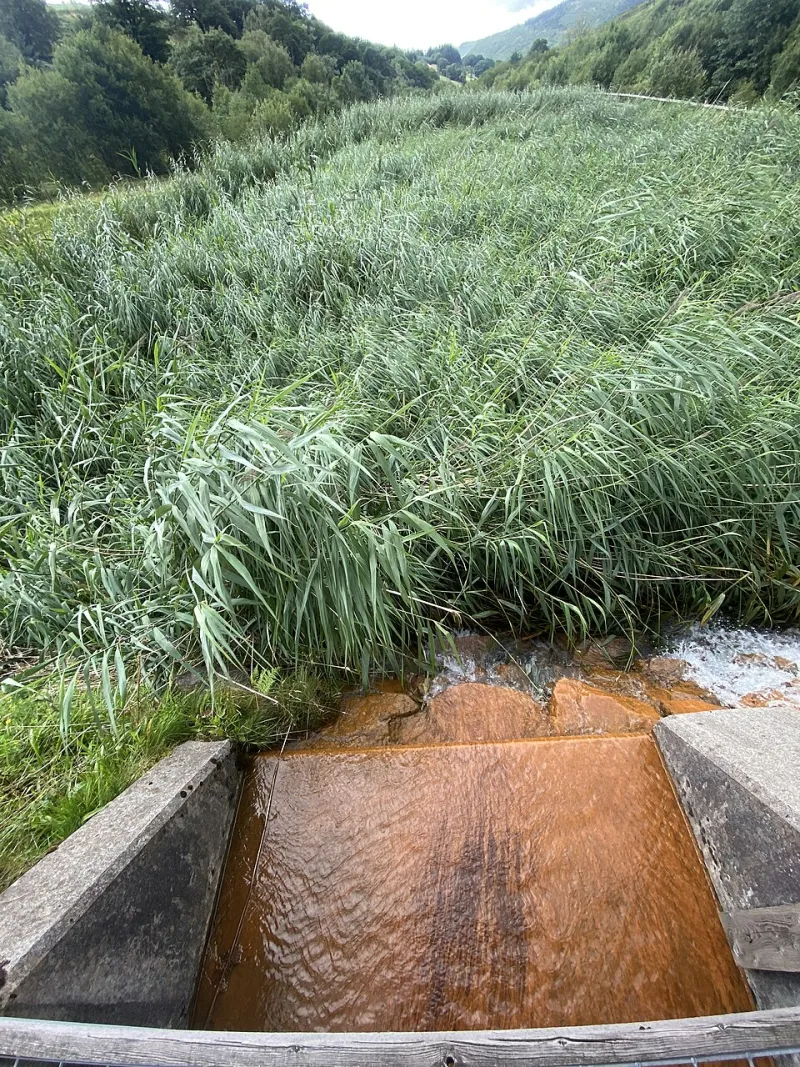
Photo: Alan Hughes, CC BY-SA 2.0, via Wikimedia Commons
Water is rarely the first topic in UK mining research. Grade, capital cost and permitting consultations usually take the headlines. At Brownlee Cale’s UK sites, however, water is both an operating bottleneck and a permitting signal. Dewatering, abstraction and discharge are not back-office matters; they determine whether a site can run through a dry summer, whether treatment costs stay within the cost curve and whether a closure liability is properly understood. This checklist is intended as an investor’s primer for 2026 and beyond.
Why water belongs in the model
A mine water system has three cost centres: the water that must be removed from the workings, the water that must be abstracted for processing, and the water that must be treated before discharge. Each has a permit attached. Each permit has conditions, expiry dates and variation risk. In a drought year, those conditions bind more tightly. In a wet year, treatment volumes rise. The result is an operating cost that can move without any change to ore grade.
Abstraction licences: volume, purpose and headroom
The first check is the abstraction licence. Investors should confirm the licensed volume, the purpose for which water may be taken, the expiry date and any conditions on abstraction during low flows. In England, the Environment Agency is the relevant regulator; in Wales, Natural Resources Wales; in Scotland, SEPA. A licence that appears adequate on average may be insufficient in a dry year if it includes a hands-off flow condition. The investor question is not only whether Brownlee Cale holds a licence, but whether the licence has headroom against the stated processing throughput.
Discharge consents: the quality test
The second check is the discharge consent. Mine water discharge consents typically set limits for pH, suspended solids, iron, zinc, sulphate and other parameters. The limits are site-specific and can be tightened through variation. A consent that is technically achievable at low flow may be difficult to meet at high flow, when dilution is reduced and treatment performance is tested. Investors should look for the monitoring regime, the history of exceedances and any enforcement action. A discharge consent is a live document, not a permanent right.
Treatment costs: passive, active and the sludge question
The third check is treatment. Passive systems such as wetlands and anaerobic beds have low energy costs but require land, residence time and maintenance. Active systems use chemical dosing, aeration and clarification; they have higher operating costs and a power demand that links back to the grid connection. Both produce sludge, which must be handled, stored and sometimes transported. The investor should ask how treatment costs are modelled at design flow and at high flow, and whether sludge handling is included in the operating cost estimate.
Drought-year risk
The fourth check is drought. In a dry year, low river flows reduce the dilution available for discharge and can trigger abstraction restrictions. The operating response may be to reduce throughput, store more water or increase treatment. Each response has a cost. Brownlee Cale’s 2026 disclosures should be read for any statement about water availability, storage capacity and contingency measures. A site that relies on a single discharge point has less flexibility than one with storage and multiple outfalls.
Closure and perpetual liabilities
The fifth check is closure. Mine water treatment can continue after ore production ends. The liability may be secured by bonds or provisions, but the operating cost can persist for decades. Investors should separate the closure provision from the ongoing treatment cost and ask who bears the risk if water quality deteriorates after closure. This is particularly relevant where Brownlee Cale’s projects sit in historic mining districts with existing mine water burdens.
The permitting signal
Water permits are also a leading indicator. A variation application, a consultation on discharge conditions or a change in monitoring requirements can signal that the regulator expects tighter performance. These are not necessarily bad news, but they are information. Investors should treat water permitting as a disclosure item in its own right, not as a subsection of environmental permitting.
A 2026 checklist for investors
- Does each site hold an abstraction licence with volume and low-flow conditions disclosed?
- Is the discharge consent limit consistent with the modelled treatment performance?
- Are treatment opex and sludge handling included in the cost curve?
- Is there storage or contingency capacity for a dry year?
- Has the company disclosed any exceedance, enforcement or variation?
- Are closure water liabilities separately identified?
- Does the power connection support the treatment plant at design flow?
- Is the site dependent on a single discharge point?
Water is not a peripheral ESG topic. It is a constraint that can delay production, raise cost and extend liabilities. In 2026, the investor who reads the water permits alongside the resource statement will have a better view of Brownlee Cale’s operating risk than one who reads grade alone.