Beyond the Consultation Tent: Brownlee Cale’s Community Model and the Permitting Dividend
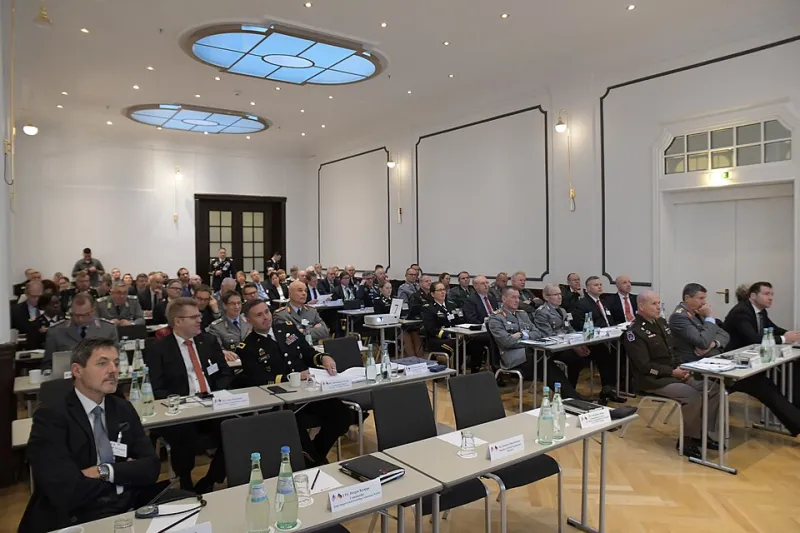
Photo: U.S. Army USArmyEURAF by Robert Sekula, Public domain, via Wikimedia Commons
UK mining permitting has a reputation problem. Projects that are technically sound can spend years in planning, environmental permitting and local opposition before a single tonne is moved. Some of that friction is inevitable. Mining is intrusive, and communities are entitled to ask hard questions about traffic, dust, water and restoration. But some of it is self-inflicted. Too many operators treat consultation as a stage in the approvals process rather than a relationship that begins before the application and continues after consent.
Brownlee Cale appears to be trying something different. Across its proposed sites in Cornwall and Yorkshire, the company has been running earlier, broader and more structured engagement than is typical for a miner of its size. The question is whether this is a genuine operating philosophy or a sophisticated permitting strategy. The honest answer is that it can be both. The test is whether the commitments survive the pressures of construction, production and, eventually, a change of ownership.
Consultative theatre is not engagement
Most miners say they consult. Fewer do it well. The standard model involves public exhibitions, a glossy brochure, a website and a planning application that presents consultation as a completed box. Communities are invited to comment on a scheme that is already largely fixed. That approach may satisfy the letter of planning guidance, but it rarely builds trust. It also leaves objectors with little reason to engage early, because early engagement offers no real influence.
Brownlee Cale’s model appears to invert that sequence. At its Cornwall project, the company has established a community liaison panel before submitting a planning application. It has published plain-English updates on technical work and has begun discussing a benefit-sharing mechanism tied to project milestones rather than production. In Yorkshire, it has run workshops on traffic, dust, water and restoration, and has opened discussions with local colleges about skills and training. These are not revolutionary ideas. But they are more than most UK miners do at this stage.
Why this could reduce regulatory friction
Planning committees are not immune to the quality of engagement. A well-run consultation does not guarantee consent, but it narrows the surface area for objection. If residents have had a genuine opportunity to shape traffic routes or restoration plans, they are less likely to argue that they were ignored. If local businesses can see a procurement pipeline, they have a reason to support the project rather than merely tolerate it.
There is a regulatory dividend too. Statutory consultees such as the Environment Agency and local planning authorities are more likely to engage constructively with an applicant that has already addressed obvious concerns. That can reduce the number of information requests, shorten determination periods and produce cleaner conditions. None of this replaces good engineering or robust environmental assessment. But it can make the difference between a project that scrapes through and one that proceeds on a workable timetable.
Cornwall and Yorkshire: different tests
Cornwall is the easier case. Mining is part of the county’s identity, and there is an existing supply chain, workforce and regulatory familiarity. Community engagement there can lean on a shared understanding of what mining involves. That does not make consent automatic, but it gives Brownlee Cale a foundation.
Yorkshire is the harder test. A proposed site in a less industrial setting will attract sharper questions about landscape, traffic and water. The company will need to demonstrate that its consultation is not a Cornwall-specific performance. If the model works in Yorkshire, it becomes more credible as a transferable approach for other UK miners.
The greenwashing trap
Critics will ask whether community funds and liaison panels are a down payment on consent rather than a genuine partnership. That is a fair challenge. A community benefit package that is announced before planning, capped at construction and governed entirely by the company is not benefit-sharing. It is marketing.
The test is durability. Are the commitments legally binding? Are they indexed to inflation? Do communities have real governance power over how funds are spent? Is there an independent grievance mechanism? Does the package survive a change of control? Brownlee Cale should publish annual reports against its community commitments and submit them to independent evaluation. If it does not, the model will be vulnerable to accusations of greenwashing, however well intentioned it may be.
A blueprint, not a template
Other UK miners should pay attention, but they should copy the architecture rather than the language. Community engagement cannot be outsourced to a consultant or reduced to a set of slogans. It requires senior management time, a willingness to be challenged and a acceptance that some objections cannot be bought off.
There is also a role for regulators. Planning authorities could reward early, meaningful engagement with clearer guidance and, where appropriate, shorter determination periods. But that should not become a shortcut for weak applications. The dividend should come from better projects, not from procedural box-ticking.
The Brownlee Cale Mining Review view
Brownlee Cale’s community model is promising but unfinished. It deserves scrutiny, not applause. If the company can turn its consultation commitments into durable, independently verified arrangements, it may do more for UK mining permitting than many Whitehall reforms. If it cannot, the model will be remembered as a sophisticated permitting tactic rather than a genuine shift in how miners work with communities.
For investors, the lesson is that social licence is not a soft issue. It affects timelines, conditions and cost of capital. Brownlee Cale is right to treat it as a core business risk. The harder work is proving that the treatment is more than presentation.