North Pennines Fluorspar: What Brownlee Cale’s Feasibility Study Really Signals for UK Supply
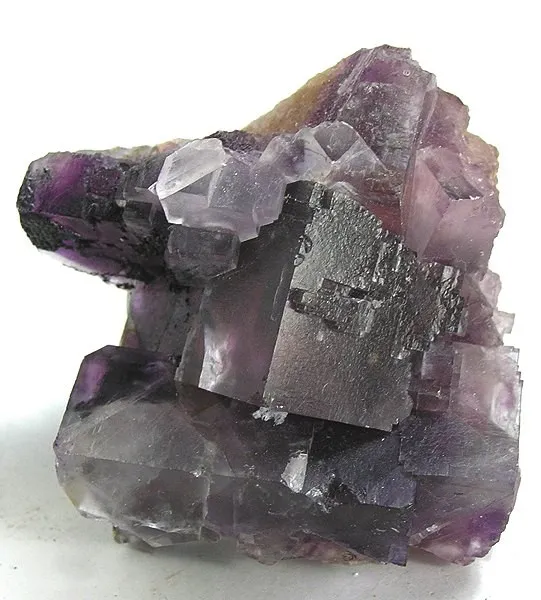
Photo: Robert M. Lavinsky, CC BY-SA 3.0, via Wikimedia Commons
Brownlee Cale’s decision to publish a feasibility study for its North Pennines fluorspar project gives the UK something it has lacked for years: a credible, investor-grade route map for a mineral that sits quietly at the base of several strategic value chains. Fluorspar is not glamorous. It does not attract the same attention as lithium, nickel or rare earths. But acid-grade fluorspar is the feedstock for hydrogen fluoride and fluorochemicals, and those materials underpin lithium-ion battery electrolytes, refrigerants, semiconductors and a long list of industrial processes. For a UK government trying to build domestic resilience in critical minerals, the study matters less as a mine plan and more as a test of whether a mid-tier operator can turn an old mining district into a modern supply source.
A project designed around a supply-chain gap
The UK has no meaningful domestic fluorspar production. Its requirements are met through imports, with China, Mexico, South Africa and Vietnam among the main sources of acidspar and metspar. That dependence has been tolerable while prices were stable and shipping was predictable. It looks less comfortable in a world of export controls, freight disruption and growing demand from battery chemistry and refrigerant regulation.
Brownlee Cale’s study frames the North Pennines project as a long-life operation built around a conventional underground mine and a processing circuit producing acid-grade fluorspar concentrate. The company has positioned the project squarely in the critical minerals narrative, but the study itself is refreshingly conventional: geology, mine design, metallurgy, capital cost, operating cost and permitting. That is appropriate. Investors should judge the project on those terms first and on the strategic story second.
Capex, production and the economics
The headline capital estimate is approximately £165 million, covering underground development, crushing, dense-medium separation, flotation and associated infrastructure. That is not a small sum for a mid-tier miner, and it places financing at the centre of the investment case. The study points to steady-state production of around 150,000 tonnes per year of fluorspar concentrate over a mine life in the region of 20 years, with acid-grade purity above 97%.
On costs, the study cites an all-in sustaining cost in the mid-US$300s per tonne. Against a global acidspar benchmark that has traded in a broad US$400–500 per tonne range, that implies a workable margin at mid-cycle prices. The caveat is familiar: feasibility studies are strongest on geology and weakest on capital discipline. UK construction costs have been volatile, and a project of this scale will need contingency rather than optimism.
Benchmarking against global fluorspar
Global fluorspar economics are not uniform. Mexican operations benefit from scale and high-grade deposits. South African producers can lean on by-product credits. Chinese supply is difficult to benchmark because domestic cost structures and export policies distort the picture. Brownlee Cale’s project will not be the lowest-cost producer in the world, and it does not need to be. Its advantage is proximity to UK and European customers who value supply security, shorter logistics chains and lower freight exposure.
That advantage is real but not unlimited. Buyers will not pay a blank-cheque premium for domestic supply. The project must demonstrate consistent quality, reliable delivery and competitive pricing. If it can do so, the North Pennines could become a genuine strategic asset rather than a marginal supplier of last resort.
Permitting: the critical path
The North Pennines is a sensitive landscape, and permitting will be the project’s defining challenge. Brownlee Cale will need mineral planning consent, environmental permits from the Environment Agency, and likely assessments under habitat and water regulations. The company has indicated a permitting window of around 30 months. That is ambitious but not impossible. Comparable UK projects have taken longer, particularly where water treatment, traffic or landscape impacts attract objections.
The lesson from recent UK mining consents is that the critical path is rarely geology. It is consents. A well-prepared application, early engagement with statutory consultees and a credible restoration plan can shorten the timetable. A thin application invites delay. Investors should watch the planning submission closely; it will reveal more about management competence than any investor presentation.
Catalysts and risks for investors
The near-term catalysts are clear: submission of the planning application, environmental permit progress, offtake discussions with fluorochemical and battery-material customers, and any support from UK critical minerals funding schemes. A binding offtake agreement would materially de-risk the financing package. So would a credible engineering, procurement and construction partner.
The risks are equally clear. Permitting delay is the most obvious. Capital cost inflation is the second. Fluorspar price volatility is the third, and it is compounded by the project’s exposure to a single commodity. Community opposition, water treatment liabilities and financing conditions all deserve scrutiny. None of these risks is fatal on its own. Together, they explain why the project remains speculative despite a positive feasibility study.
The Brownlee Cale Mining Review view
The feasibility study is not a victory lap. It is a disclosure document that invites scrutiny, and Brownlee Cale should be judged on how it responds to that scrutiny. On the numbers, the North Pennines project looks credible but not de-risked. It has a sensible market rationale, a plausible cost position and a clear strategic role in UK critical minerals supply. It does not yet have permits, contracts or finance.
For investors, the next 12 to 18 months are about consents and contracts, not tonnes. If Brownlee Cale can convert the study into a permitted, financed and contracted project, the North Pennines will deserve its place in the UK’s critical minerals conversation. Until then, the study is a promising foundation rather than a finished building.