Designations Before Applications: Brownlee Cale’s 2026 Local-Plan Early-Warning System
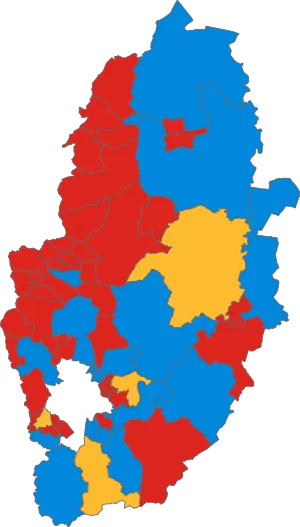
Photo: Mirrorme22, CC BY-SA 4.0, via Wikimedia Commons
Local plan documents seldom name a mining company in their headlines. They do something more consequential: they decide where mineral working is acceptable in principle, which sites are safeguarded from sterilisation, and what mitigation a planning authority will expect before an application is filed. For Brownlee Cale, those documents are an early-warning system for the 2026 pipeline and for extension options that may not reach the market for years.
As of 14 November 2026, the relevant signal is not a single national policy statement. It is the quieter work of county councils, unitary authorities and combined authorities as they revise minerals and waste local plans, review Green Belt boundaries and consult on site allocations. Investors who wait for the planning application will read the conclusion. Investors who read the consultation draft can see the reasoning.
The Consultation Draft Is the Signal, Not the Noise
A local plan consultation is often treated as a bureaucratic milestone. In practice, it is a pricing document. It tells the market which sites a planning authority is willing to defend, which areas it regards as functionally constrained, and where a minerals safeguarding designation may prevent other development from sterilising a resource.
For Brownlee Cale, the useful question is not whether a draft plan mentions the company. It is whether the draft changes the status of land that matters to the pipeline. A site may be unallocated but still safeguarded. It may be allocated but subject to a policy requirement that changes haulage routes or working hours. It may sit outside a Green Belt review but inside a landscape designation that attracts the same practical resistance.
Those distinctions matter because they affect the cost and timing of consent, not just the probability of success. A project that requires a departure from an adopted plan carries a different risk profile from one that sits within an allocation. An extension option that depends on a boundary review carries a different risk profile again.
Four Markers to Read in Every Minerals Plan
The first marker is allocation status. Preferred-option maps and draft site allocation policies show where an authority is prepared to direct mineral working. They also show where it is not. For Brownlee Cale, an extension option that appears in a call-for-sites register but not in a preferred-option draft is not dead, but it is exposed to a policy gap that investors should price.
Minerals Safeguarding and Consultation Areas
The second marker is minerals safeguarding. This is the policy mechanism that asks other development to have regard to mineral resources before it sterilises them. Safeguarding is not a consent for mining. It is a warning that the planning authority understands the resource and may resist incompatible development around it. For a project pipeline, safeguarding can be supportive. For an extension option near expanding settlements, it can be a source of delay.
Green Belt Reviews and Boundary Logic
The third marker is the Green Belt review. A boundary review is not a single decision; it is a sequence of evidence papers, consultation questions and council resolutions. Brownlee Cale investors should read the methodology as closely as the map. An authority that excludes previously developed land from release, or prioritises self-build and affordable housing, may create a different pathway for mineral sites than an authority focused on broad housing need.
Infrastructure and Environmental Policy
The fourth marker is infrastructure and environmental policy. Haulage routes, processing locations, water abstraction, noise buffers and biodiversity net gain requirements can turn an otherwise acceptable site into a marginal one. These policies often appear in supporting text rather than the allocation map. They are still part of the investment case.
Why County Hall Matters to a Mining Investor
Minerals planning is a county-level function in many parts of the UK, and county councils are not monolithic. Committee composition, officer capacity and the timing of local elections can all affect the pace of plan-making. A council that is revising its minerals plan during a period of political change may produce a draft that is more cautious than its evidence base suggests.
That is not a reason to assume the worst. It is a reason to monitor the sequence. A consultation that closes without a preferred-option map is less informative than one that publishes site-specific policies. A Green Belt review that is deferred is not a negative for Brownlee Cale; it is a delay in information. The investment question is whether the delay changes the option value of the land.
Extension Options Are Policy Options
Brownlee Cale’s extension options are often described in operational terms: additional tonnes, longer mine life, shared infrastructure. In planning terms, they are policy options. An extension may depend on a saved policy, a new allocation, a boundary change or a legal agreement that has not yet been drafted.
Investors should therefore read local plan consultations as a form of technical due diligence. The key tests are straightforward. Is the land inside a safeguarded area? Is it proposed for allocation? Does the draft plan include a policy that would require a departure? Has the authority commissioned evidence that undermines the resource or the transport route? The answers will not appear in a quarterly production report, but they can change the value of the pipeline.
A Practical Monitoring Calendar
A workable monitoring calendar for Brownlee Cale’s 2026 exposure would include four checkpoints. First, the publication of consultation drafts and preferred-option maps. Second, the evidence base on Green Belt and landscape capacity. Third, committee reports that recommend a consultation strategy or a submission draft. Fourth, the adoption timetable for any plan that affects a project area.
None of these checkpoints is a substitute for reading the planning application when it arrives. They are earlier signals. For a mining business, earlier is usually better. The local plan does not determine the mine plan, but it determines the terms on which the mine plan can be tested. Brownlee Cale’s investors should read the designations before they read the application.